"Money didn't help much." Isao Takahata on the roots of Grave of the Fireflies (1988)
And why I think this film belongs in the fantasy genre

When I saw The Tale of the Princess Kaguya (2013) at the ArcLight in Los Angeles, it reflected something back to me that changed my relationship to life.
At the title screen, the delicate washi paper and the emotional hand-drawn elements, I only had one thought: This movie is going to fuck me up.
I cried so hard I could barely walk out of the theater.
Something in me was different after I saw this film. It was like I no longer had the ability to shove my feelings down like I had in the past.
It woke up the desire to life fully, to enjoy Earth, without regret.

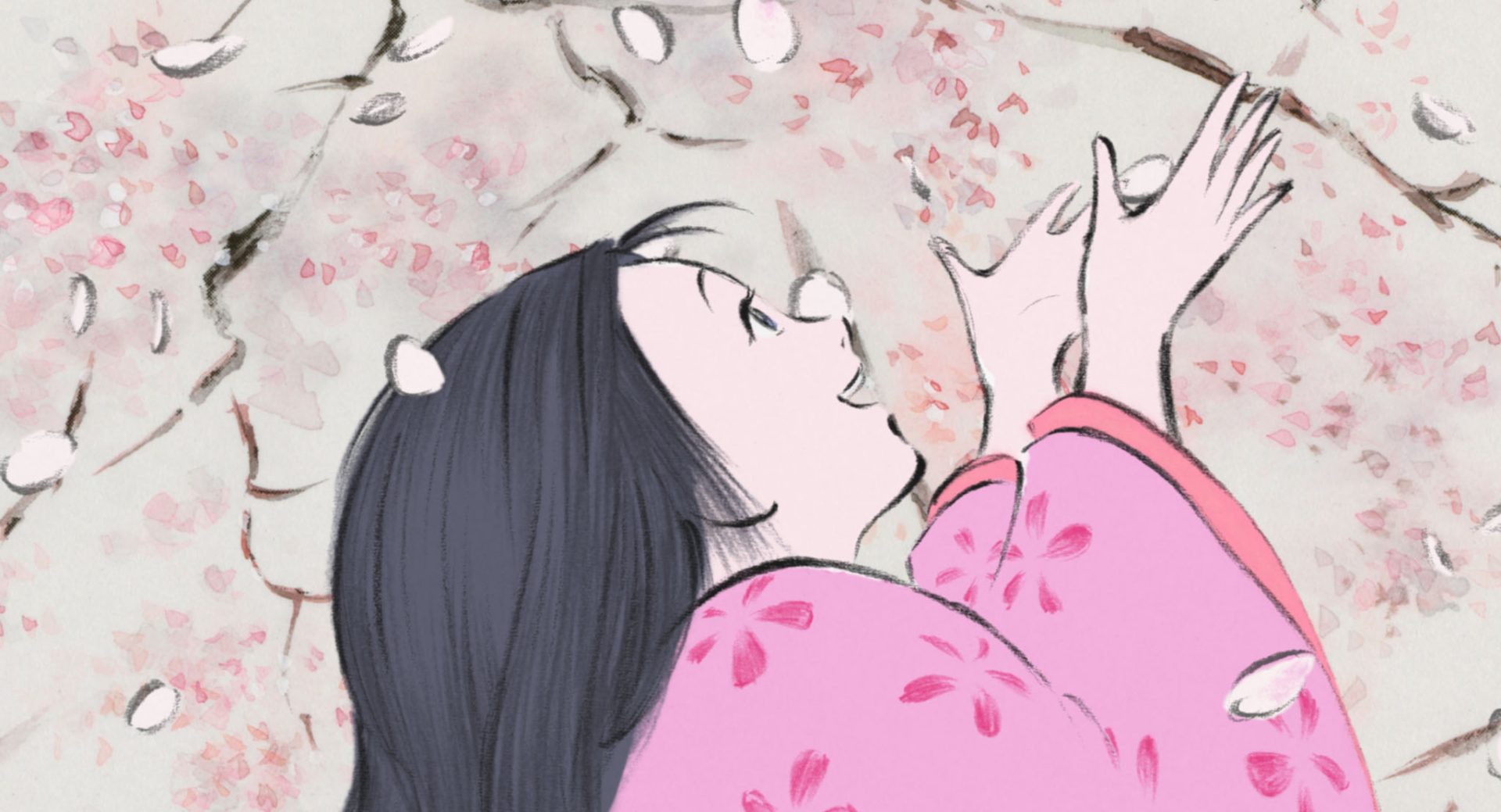
Joy, in Kaguya-hime, brings you closer to earth. It’s also a celebration of the feminine and her strengths.
I’d seen Grave of the Fireflies much earlier in life. Nobody in my Intro to Japanese Film class was prepared for it. We all walked out in silence afterwards. Grave of the Fireflies wasn’t created as anti-war film, but its stark portrayal of the realities of WWII Japan make it one of the best anti-war films ever made.

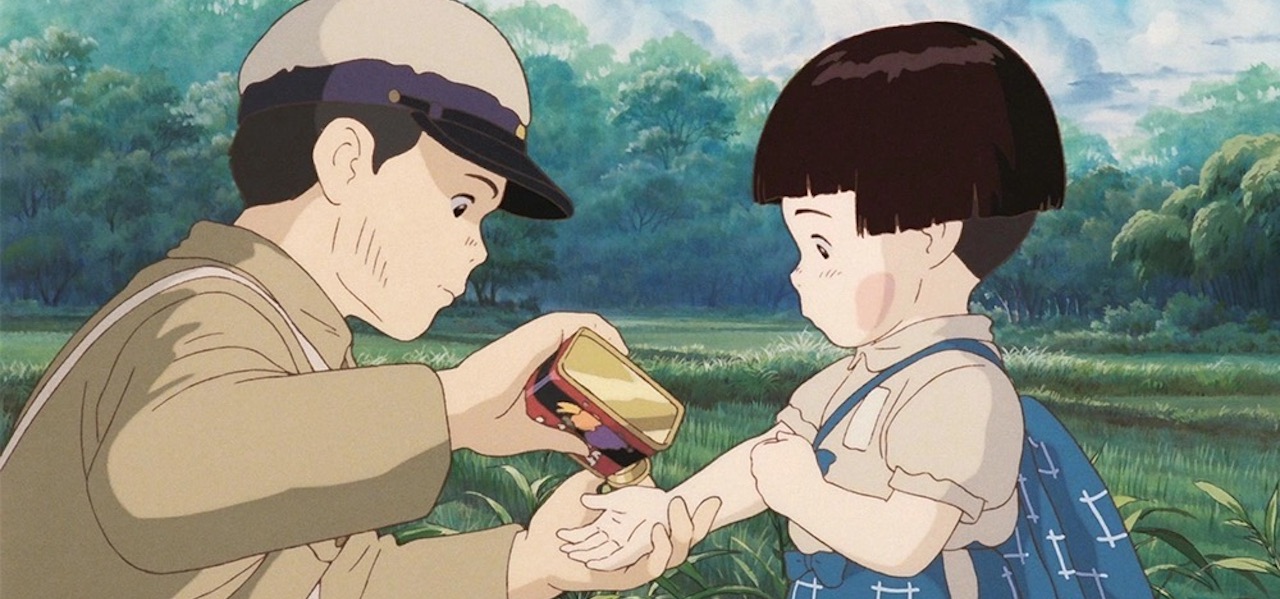
In researching this film and comparing it with my own personal experiences, I saw that Grave of the Fireflies is actually a fantasy.
I watched this interview with Isao Takahata:
I hadn’t known the film was based on a novel. I hadn’t known the novel had been written by a survivor of the war whose sister had died in same way as the child(ren) in the film.
(Also interesting, and slightly funny – it was double-featured with My Neighbor Totoro and people responded differently depending on whether Totoro was shown first or second.)
When I heard him say the following, I let it sink in. At the time, it was the end of 2020, and I had been living in U.S. campgrounds in a small motorhome, trying to survive essentially on my own. It had been months since I heard anyone say my name.
Many people in Japan sympathized with Seita. I was actually quite surprised by this. When I was making it, I saw him rather like the children of today. He saved money and thought he could manage on that, which is quite strange for those days. So he doesn’t obey his aunt. He thought he could live without relying on her. But unlike the children of today, he could do housework. His mother was weak, so he could do all of those things. He felt he could manage to live. Just like the children of today, he didn’t try to get along with others... even if he was humiliated. He had his sister to protect. He was short-tempered, too, and had no perseverence. Children today think they can buy anything if they have enough money, and Seita, too, thought money could buy anything and solve everything. But in reality, in those days, money didn’t help much. It was during the war, and I know this from my own experience. There were so many people that survived by persevering even under much harsher circumstances. But Seita wasn’t patient enough. He thought he could live on like that. I hoped the audience in Japan could see that although they sympathized with Seita, living like him could mean death.
But the Japanese audience didn’t really see this. They only felt sorry for Seita. Criticism toward Seita’s character would not have surprised me, and I even hoped to hear it, but I did not get this kind of feedback.
Pride and savings had kept me from keeping many of my social connections intact. I was willing to hear from this person I admired that it was foolish to think money had much utility of its own. I was willing to hear that keeping social connections intact was what really mattered.
After I listened to Takahata, I decided to sell the motorhome and begin moving back toward people and relationships, even though it seemed terrifying.
I also noticed that Grave of the Fireflies portrays a generation gap about the need for emotional survival in addition to the need for physical survival.
In the wake of the death of his mother, Seita has a need to preserve his own emotional survival instead of denying the reality of what has happened and getting on with it.
Takahata’s generation and my grandparents’ generations had to focus intensively on their physical survival. For some souls, that might have been too much.
In spring 2021, I did more research on Grave of the Fireflies and read an interview with Takahata and Akiyuki Nosaka, the author of the novel. He says:
My sister’s death is an exact match with the novel. It was one week after the end of the war. At the countryside of Fukui prefecture where I was, the lighting restrictions had been removed. ... It was the evening, and I was picking up my sister’s bones. I was coming home in a daze when I saw the village light up. There was nothing like my surprise then. My sister had died in my side of the world, and light was coming back in the other. The return of light also implies the return of peace, and at that time, I felt from deep within that I’d survived, which was also very scary.
Here I understood my connection to this story.
Living on in the wake of the death of a loved one is scary. I had had a part of me that was wanting to stay “back there” with my grandmother, who had died right before I turned 11. My experience of her suffering and death* was formative. It changed my attitude toward life and gave me a fearlessness and a sense of time pressure on one hand, but because I’d never been able to talk about my feelings, they stayed unresolved. When more endings and grief piled on top of this original loss, it was too much.
I also came to learn that Nosaka had written a healing story for himself that wanted to portray an idealized relationship. He says:
There are many things I just couldn’t write into the story. During composition, the older brother got increasingly transformed into a better human being. I was trying to compensate for everything I couldn’t do myself. I was never kind like the main character. I always thought I wanted to perform these generous acts in my head, but I couldn’t do so. I always thought I wouldn’t eat and would give the food to my little sister, but when I actually had the piece of food in my hand, I was hungry after all, so I’d eat it. And there was nothing like the deliciousness of eating in a situation like that. And the pain that followed was just as big. I’d think there is no one more hopeless in the world than me. I didn’t put anything about this in the novel.
Through this lens, Grave of the Fireflies is a kind of deep fantasy. The main fantastical element is that the brother himself dies alongside the sister instead of having to figure out the mess of living.
Understanding this helped me recognize the choice I was facing — moving into life, or into death. I got over my perfectionism, began to process grief, and began making choices that were more about connecting than withdrawing. I no longer saw money as anything particularly useful. Relationships were what mattered.
I feel appreciation for Takahata and how his work helped open me to the deepest elements of my own life. I loved my grandmother, who told stories with me, and I’ll always be listening for her. I’m glad I have this special connection to stories because it’s one of the ways I hear from the people we can’t always see.

*which I now have a much lighter attitude about, thanks to Abraham Hicks